- All
- Product Name
- Product Keyword
- Product Model
- Product Summary
- Product Description
- Multi Field Search

Views: 0 Author: Site Editor Publish Time: 2025-12-15 Origin: Site


Fiber laser welding machines are transforming manufacturing. Why are they becoming the top choice for metal joining? Precision, speed, and efficiency set them apart.This article explores fiber laser welding technology and its growing importance. You’ll learn about key advantages and diverse applications.We’ll cover system components, machine types, comparisons with other methods, and tips for optimizing welding processes.
Fiber laser welding machines offer numerous benefits that have made them a preferred choice in modern manufacturing. Their unique features help manufacturers improve productivity, quality, and flexibility.
One of the key fiber laser welding advantages is the ability to weld at very high speeds. By adjusting the laser power, manufacturers can scale the welding speed to fit their specific application needs. This flexibility makes fiber laser welding machines ideal for both small, precise tasks and large-scale production runs. For example, handheld fiber laser welding machines can quickly handle repair work, while industrial fiber laser welding systems excel in continuous production.
Fiber laser welding technology delivers exceptional precision. The laser beam is tightly focused, allowing for clean, accurate welds with minimal heat distortion. This precision is critical in automated setups where repeatability is essential. Fiber laser welders integrated with robotic systems maintain consistent quality across thousands of welds, reducing waste and rework.
Fiber lasers can weld a wide range of metals, including copper, aluminum, and stainless steel. They also excel at joining dissimilar metals, which is challenging for many traditional welding methods. This capability opens up new fiber laser welding applications in industries requiring complex assemblies, such as automotive battery manufacturing.
Fiber laser welding machines are compact and require less floor space compared to older welding equipment. Their solid-state laser sources have fewer moving parts, which means lower maintenance and longer service life. This compactness and reliability reduce downtime and operating costs.
Fiber laser welding equipment uses energy efficiently, focusing heat precisely where needed. This results in a minimal heat-affected zone, preserving the properties of the base materials and reducing distortion. The efficient energy use also translates into lower fiber laser welding machine price of operation over time.
Fiber laser welding machines are easily automated. Their digital controllers allow seamless integration with robotic arms and vision systems. This compatibility enables manufacturers to boost throughput and maintain high-quality standards, especially for complex or repetitive welding tasks.
Despite their advantages, fiber laser welding machines face challenges such as sensitivity to joint gaps, material reflectivity, and the need for laser safety measures. Manufacturers can overcome these by optimizing laser parameters, using shield gases, and protecting optical components. Partnering with experienced fiber laser welding machine manufacturers ensures tailored solutions that address these issues.
Tip: When selecting a fiber laser welding machine, consider your specific metal types and production scale to choose a system with the right laser power and automation features for maximum efficiency.
Fiber laser welding machines rely on a sophisticated combination of optical, electrical, and mechanical components that work together to deliver precise and efficient welds. Understanding these core components helps manufacturers select the right fiber laser welding system and optimize its performance.
At the heart of every fiber laser welding machine is the laser source. It consists of three main parts:
Pump Source: Typically an array of laser diodes, this component converts electrical energy into light energy.
Gain Medium: A fiber doped with rare-earth elements like ytterbium. It amplifies the light as it passes through.
Laser Cavity: The section where light amplification occurs, producing a coherent laser beam.
This solid-state laser design ensures high beam quality and reliability, critical for consistent welding results.
The laser beam travels through several key optical parts:
Fiber Optics Cable: Guides the laser light from the source to the welding head with minimal loss.
Collimator: A lens that aligns the laser beam into a parallel path, improving focus.
Focusing Lens: Concentrates the beam onto the workpiece surface for precise welding.
Additional optical elements like beam expanders and scanning heads may be included to adjust beam size and direction, accommodating different welding tasks.
The electrical system powers and controls the laser welding machine:
Power Supply: Converts AC to DC power suitable for the pump source.
Laser Controller: Manages laser parameters such as power output, pulse frequency, and safety interlocks. It enables integration with automation systems, improving process control.
Some fiber laser welding machines include extra equipment to enhance weld quality and safety:
Wire Feeder: Adds filler material during welding, useful for bridging joint gaps or modifying weld properties.
Shield Gas: Argon or other inert gases protect the weld pool from oxidation, reducing defects.
Fume Extraction: Removes harmful fumes and particles generated during welding, maintaining a safe work environment.
High-power fiber laser welders generate heat that must be dissipated to maintain performance and prevent damage:
Air Chillers: Suitable for lower-power systems, using airflow to cool components.
Water Chillers: Provide efficient cooling for high-power applications, ensuring stable laser operation.
Advanced fiber laser welding systems often feature real-time monitoring tools. These track weld parameters and detect defects, enabling immediate corrective actions. Such laser weld monitoring improves yield and reduces rework.
Fiber laser welding machines come in two main types:表格 还在加载中,请等待加载完成后再尝试复制Choosing between CW and pulsed fiber laser welding technology depends on the application’s precision, material thickness, and thermal sensitivity.
Tip: When evaluating fiber laser welding machines for sale, consider the full system—optical, electrical, and auxiliary components—to ensure it meets your specific welding applications and production needs.
Fiber laser welding machines come in various forms, each designed to meet specific manufacturing needs. Choosing the right type depends on factors like production volume, precision requirements, and budget. Below, we explore the main types of fiber laser welding machines and their typical applications.
Handheld fiber laser welding machines offer remarkable accessibility. Operators hold a compact welding gun, similar to traditional MIG or TIG welders. These machines are ideal for repair work, maintenance, and small-scale production. Their ease of use means even less experienced welders can quickly produce high-quality welds. The handheld fiber laser welding machine price varies but is generally lower than automated systems, making it attractive for workshops and on-site applications.
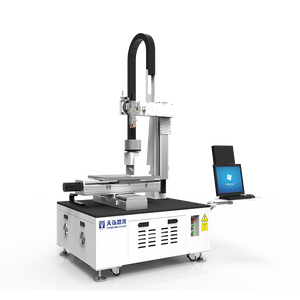
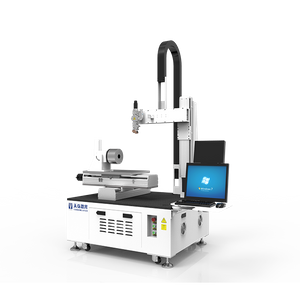
Laser welding workstations provide semi-automated solutions. Operators load parts and initiate welding cycles, which run with minimal manual intervention. These systems excel in small batch production, prototyping, and process development. They combine precision and repeatability without the complexity of full automation. Manufacturers often seek fiber laser welding machines for sale in this category to balance cost and productivity. Workstations are common in electronics and medical device manufacturing.
Robot laser welding machines integrate fiber laser welders with robotic arms. This combination delivers unmatched precision and repeatability for large-scale manufacturing. Robots can weld complex geometries and large assemblies like automotive body parts or aerospace components. These systems boost throughput while maintaining consistent weld quality. The fiber laser welder price for robotic setups is higher but justified by efficiency gains and reduced labor costs.
Robot-assisted laser welding machines enhance production lines by combining robotic handling with laser welding heads. Robots position and clamp parts, minimizing downtime between welds. This setup allows dynamic adjustment of clamping pressure and positioning to optimize weld quality. Industries such as battery manufacturing benefit from these systems, where speed and precision are critical. Fiber laser welding equipment in this category often includes vision systems for real-time monitoring.
Selecting the best fiber laser welding machine depends on your specific needs:
Production volume: Handheld machines suit low volumes; robots excel in mass production.
Precision: Robotic and workstation systems offer higher repeatability.
Material and part size: Consider the laser power and system configuration.
Budget: Handheld and workstations have lower initial costs; robots require higher investment but reduce operating costs.
Automation needs: Fully automated systems improve throughput and reduce labor dependency.
Consulting with fiber laser welding machine manufacturers can help tailor solutions that fit your production goals and budget.
Tip: When choosing a fiber laser welding machine, match the system type to your production scale and precision needs to optimize investment and performance.
Fiber laser welding machines have revolutionized manufacturing by offering unique benefits over traditional welding methods. Let’s explore how fiber laser welding compares to ultrasonic bonding, MIG, TIG, and resistance welding in terms of speed, quality, precision, and cost.
Ultrasonic bonding uses high-frequency vibrations to join materials, often plastics or thin metals. Compared to this, fiber laser welding machines deliver:
Much faster processing speeds: Fiber lasers can be at least 10 times faster, enabling higher throughput.
Stronger, more durable welds: The laser’s focused heat creates deep, precise fusion.
Broader material compatibility: Fiber lasers weld a wide range of metals, including dissimilar ones, unlike ultrasonic bonding which is limited to softer materials.
Higher initial investment: Ultrasonic bonding equipment tends to be less costly upfront.
This makes fiber laser welders ideal for manufacturers seeking speed and strength in metal joining, especially in automotive battery and electronics sectors.
MIG welding uses a consumable wire electrode and shielding gas to create welds. Compared with fiber laser welding machines:
Fiber lasers produce higher-quality welds with less spatter and distortion.
Laser welding offers greater precision and repeatability, especially important in automated production.
MIG welding is generally simpler and less expensive to set up, suitable for thicker materials and manual operations.
Fiber laser welding systems require higher initial investment but reduce labor costs through automation.
For high-volume, precision applications, fiber laser welding systems provide superior efficiency and weld quality.
TIG welding uses a non-consumable tungsten electrode and filler rod, demanding skilled operators. Compared to fiber laser welding:
Fiber lasers create smaller heat-affected zones, preserving base material properties.
Laser welding is faster and easier to automate, reducing operator dependency.
TIG welding may produce more visually appealing welds, preferred in aesthetic applications.
Laser welding requires less manual skill, ideal for consistent, high-volume production.
Fiber laser welding machines suit manufacturers prioritizing precision and throughput over manual craftsmanship.
Resistance welding generates heat through electrical resistance at the joint, requiring contact electrodes. In contrast, fiber laser welding is a non-contact process with these advantages:
More precise and smaller welds with minimal distortion.
No electrode wear or contamination issues, reducing maintenance.
Resistance welding is simpler and cheaper for small-scale or manual tasks.
Fiber laser welding machines have higher upfront costs but offer better quality and automation potential.
For applications demanding fine, repeatable welds, fiber laser welding systems outperform resistance welding.
表格 还在加载中,请等待加载完成后再尝试复制Fiber laser welding equipment offers long-term savings and sustainability benefits despite higher initial investment.
Tip: When evaluating fiber laser welding machines versus traditional methods, consider total cost of ownership and production goals to select the most cost-effective and efficient technology for your application.
Fiber laser welding machines have become a vital tool across many industries due to their precision, speed, and versatility. Their ability to weld various metals and complex parts makes them suitable for a wide range of manufacturing needs. Below, we explore key fiber laser welding applications in different sectors.
In automotive manufacturing, fiber laser welding technology plays a crucial role. It is extensively used to join battery cells and modules, enabling fast and reliable assembly of electric vehicle battery packs. The precision of fiber laser welders ensures strong, consistent welds in battery tabs and busbars, critical for performance and safety.Additionally, fiber laser welding machines are employed to fabricate body-in-white structures, suspension components, and transmission systems. Their high welding speed and ability to handle dissimilar metals help improve production efficiency and vehicle durability.
The aerospace sector demands high-quality welds with minimal distortion. Fiber laser welding machines meet these requirements by producing precise joins on turbine blades, frames, and fuselage sections. The minimal heat-affected zone preserves material properties, which is essential for the safety and performance of aircraft parts.Robotic fiber laser welding systems often handle large aerospace components, ensuring repeatability and reducing human error in critical assemblies.
Fiber laser welding systems are ideal for electronics manufacturing, where small, delicate parts require precise welds. They are used to join printed circuit boards, battery cells, housings, and electrical contacts. The focused laser beam allows for micro welding applications that maintain component integrity and functionality.Handheld fiber laser welding machines also support repair and prototyping tasks in electronics workshops, providing flexibility at competitive handheld fiber laser welding machine prices.
Medical device manufacturers benefit from fiber laser welding machines due to their ability to produce clean, biocompatible welds. These machines join implants, surgical tools, and other medical components with high precision and minimal heat distortion.The controlled laser welding technology helps maintain the mechanical and chemical properties of sensitive materials, ensuring product safety and reliability.
In construction and defense, fiber laser welding equipment is used to fabricate structural frames, window frames, pipes, and armor plates. The machines can handle thick metals and provide strong, durable welds essential for structural integrity and protection.Their automation compatibility allows for high-volume production of complex parts while maintaining consistent quality.
Fiber laser welding technology is gaining traction in renewable energy sectors, such as solar panel assembly and battery manufacturing for energy storage systems. Its ability to weld dissimilar metals and thin materials efficiently supports innovations in these fields.For example, fiber laser welding machines are used to connect battery cells in energy storage modules, where speed and quality are paramount.
Tip: When exploring fiber laser welding applications, consider industry-specific requirements like material types, part size, and production volume to select the most suitable fiber laser welding machine and system configuration.
Optimizing fiber laser welding processes is key to unlocking the full potential of laser welding machines. By fine-tuning parameters and maintaining equipment properly, manufacturers can achieve consistent, high-quality welds while minimizing downtime and waste.
Each metal type and thickness requires specific laser settings. Adjusting laser power, welding speed, and focal position helps accommodate different materials such as copper, aluminum, or stainless steel. For example, thicker metals need higher power and slower speed to ensure full penetration, while thin metals require lower power to avoid burn-through. Pulsed lasers may be preferred for delicate or thin materials to reduce heat input.
Fiber laser welding machines are sensitive to joint fit-up. Small gaps or misalignments can cause incomplete welds or porosity. Using wire feeders to add filler material can bridge gaps and improve weld strength. Additionally, applying shield gas like argon protects the weld pool from oxidation and reduces defects. Careful part preparation and consistent positioning also reduce variability.
Laser welding involves high-intensity beams that can be hazardous. Proper safety protocols are essential. This includes using protective eyewear, installing safety interlocks, and enclosing the welding area to prevent accidental exposure. Training operators on safe handling of handheld fiber laser welding machines and larger systems ensures workplace safety.
Optical parts such as focusing lenses and fiber cables are critical and sensitive. Dust, fumes, or spatter can degrade optics and reduce laser efficiency. Regular cleaning, using protective cover glasses, and proper fume extraction help maintain optical clarity. Scheduled maintenance and monitoring extend the lifespan of fiber laser welding equipment and prevent unexpected failures.
While some fiber laser welding applications work without shielding gas, adding an inert gas like argon often improves weld quality by preventing oxidation. Wire feeding supplies filler metal to strengthen joints or fill gaps, especially useful in applications with imperfect fit-up or where mechanical properties need adjustment. These enhancements can increase process robustness.
Integrating automation and laser weld monitoring systems helps maintain consistent quality. Real-time sensors detect deviations such as incomplete fusion or porosity, enabling immediate corrective actions. Automated systems also control laser parameters precisely, reducing human error and scrap rates. This leads to higher throughput and lower production costs.
Tip: Regularly calibrate your fiber laser welding machine and tailor laser settings for each metal type and thickness to maximize weld quality and operational efficiency.
Fiber laser welding machines offer high speed, precision, and energy efficiency, transforming manufacturing processes. Their compact design and automation compatibility enhance productivity and reduce costs. Future trends include advanced monitoring and integration with robotics for greater efficiency. These machines suit diverse industries, from automotive to electronics, improving weld quality and consistency. Partnering with experts ensures tailored solutions that meet specific production needs. Suzhou Tianhong Laser Co., Ltd. provides reliable, cutting-edge fiber laser welding machines that deliver lasting value and performance.
A: Fiber laser welding machines offer high welding speed, precision, minimal heat-affected zones, and the ability to weld diverse metals including dissimilar combinations. They are energy-efficient, compact, require low maintenance, and integrate easily with automation, making them superior to many traditional methods in quality and productivity.
A: Handheld fiber laser welding machines generally have a lower fiber laser welding machine price than fully automated systems. They are ideal for repair and small-scale applications, offering accessibility and flexibility without the higher investment required for robotic or workstation fiber laser welding equipment.
A: Key components include the laser source (pump source, gain medium, laser cavity), optical parts (fiber optics cable, collimator, focusing lens), electrical systems (power supply, laser controller), and auxiliary equipment like wire feeders, shield gas, and cooling systems. These affect performance and suitability for your fiber laser welding applications.
A: Fiber laser welders provide precise, fast, and repeatable welds essential for complex assemblies such as automotive battery cells and electronic circuit boards. Their ability to weld dissimilar metals and thin materials with minimal distortion meets the stringent quality and production demands in these sectors.
A: Optimizing involves adjusting laser power, speed, and focus for different metals and thicknesses, managing joint gaps with wire feeding, using shield gas to prevent oxidation, protecting optical components, and incorporating automation with real-time monitoring to ensure consistent, high-quality welds while minimizing waste.